
Garment care
Mending Is Not a Compromise: Caring for Clothes You Love
A good garment should be worth repairing. A small tear shouldn’t suddenly make the entire garment worthless.
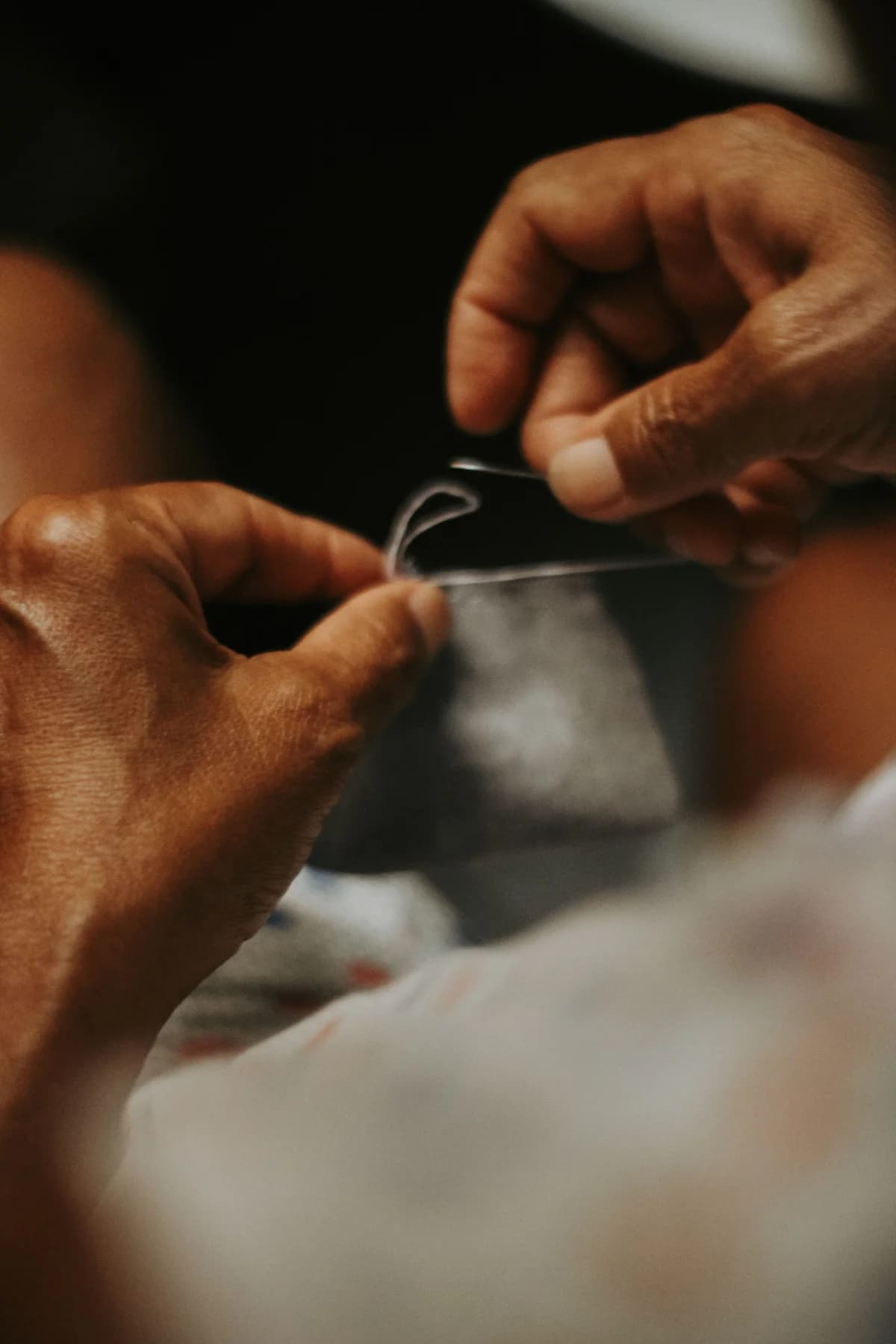
There is something slightly strange about the way we treat clothes today. A shirt gets a small tear, a cuff starts to fray, or a button comes loose, and our first thought is often to replace it. It is easy enough. Open a website, find another shirt, place the order and move on. But if you really like the shirt, why replace the whole thing?
A good garment should be worth repairing. Somewhere along the way, we stopped thinking about clothes this way. We became used to buying something, wearing it for a while and getting rid of it when it no longer looks perfect. That is understandable when a shirt costs ₹1,500 and you have no particular attachment to it. It feels different when you have spent ₹10,000 or ₹15,000 on something that fits exceptionally well and has become one of the shirts you automatically reach for.
A small tear shouldn't suddenly make the entire garment worthless. A collar can be replaced. A cuff can be repaired. A buttonhole can be reinforced. A small tear can be darned. People did all of this long before “sustainability” became a word used in fashion. Clothes were repaired because they were worth keeping. We think there is something useful in bringing that attitude back.
A shirt that has been worn for years will naturally show some signs of use. Cotton becomes softer. Linen develops more character. The collar settles. The fabric takes on the shape of the person wearing it. That isn't necessarily damage. Sometimes you can simply tell that a shirt has been worn and looked after.
Of course, there is a limit. A shirt that has completely lost its shape or has been worn through in several places may not be worth saving. Repairing everything just because it can be repaired would be silly too. The useful question is whether the garment is finished or just needs some attention.
This is where good clothing has an advantage. Good fabric, strong stitching, properly constructed seams and a collar that can be repaired give you something to work with. The same applies to shoes. A good pair of leather shoes does not automatically go into the bin when the sole wears down. You take them to someone who knows what they are doing and have the sole replaced. We don't see why a good shirt should be treated so differently.
There is also the simple fact that once you have owned something for long enough, you know it. You know how it fits, how the fabric feels, which trousers work with it and how it behaves after a long day. Finding another shirt that does all of that is not always easy. The new one may fit differently. The collar may sit differently. The fabric may not feel the same. Sometimes the shirt you already own is simply better.
We also don't think a repaired shirt has to look brand new. A small, well-done repair can become part of the garment. There is something nice about a shirt that has been worn for years and has had a few things fixed along the way. It means someone kept it. That is very different from buying something with an artificial vintage finish just to make it look old. One has actually been worn. The other was made to look that way.
We don't give many things enough time to become familiar anymore. We buy them, use them for a while and replace them when something starts to look less than perfect. We would rather see a wardrobe work a little differently. Buy things you actually like. Wear them often. Look after them. If something needs repairing, repair it. If it eventually reaches the end of its useful life, then replace it.
There is no point keeping a shirt that is genuinely finished, but there is even less point throwing away a perfectly good one because a cuff needs attention.
A good shirt should be allowed to have a life beyond the day you bought it.