
Parampara
A Beginner's Guide to Indian Handloom Traditions: The Parampara of Ikat, Ajrakh, and Mangalagiri
A handwoven cloth carries traces of the hand that made it. A slight irregularity, a variation in texture, a character that becomes more familiar with time.
For centuries, Indian craftsmen have spun cotton, silk, linen, wool, and many other regional fibres, weaving them into fabric. These fabrics were created based on the local geography, customs, and fashion trends. Yet, we kept losing these fabrics from our daily use to modern mill-made fabrics. The colonial times gave us the machines which brought us consistency, speed, and affordability. Almost every fabric available in the market today is made by machines, with each lot having the same features.
The factory-made, perfectly uniform fabric became more desirable than the one made by hand, which had variations in colour and texture. The tiny irregularities which told us that the piece of fabric was made by hand started being mistaken for flaws. Today, that perception is changing slowly, with more people showing interest towards Indian heritage fabrics, both in India and abroad.
These ideas aren't new to India as they have existed in our weaving communities for generations. The weavers call this their Parampara. Parampara is a tradition or a skill which is passed on from one generation to the other. In the world of textiles, this might mean the techniques of preparing yarn, weaving, tying, dyeing, working a loom, or printing motifs that have been learnt through years of rigorous training and practice. The hand-woven fabric is more than something we simply wear; it carries the knowledge and the perfection of the hands of the people who made it.
Ikat: When the Patterns Begin Before the Weaving
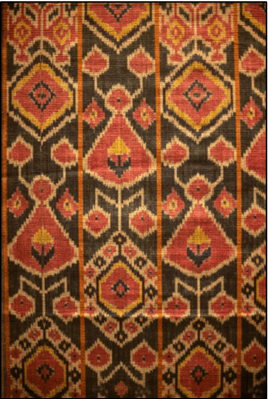
Ikat is found in many states of India, like Odisha, Telangana, and Gujarat, with each region having its own unique variation. The unique feature of this technique is that the pattern is created even before the fabric is woven. Generally, in other forms of weaving, the yarns are first placed on the loom, and the pattern takes place as the cloth takes shape.
In Ikat, sections of the yarn are first tied and then dyed. The tied portions resist the dye, leaving parts of the yarn in their original colour. The process is repeated with different colours before the yarn reaches the loom. The weaver then arranges these dyed threads carefully to form the intended design.
Ikat's characteristic is a slightly blurred appearance. The edges aren't as sharp as those made by machines, and even a little variation in the placement of the loom creates a variation in the design. These variations are a salient feature of Ikat. This technique needs considerable planning, where the weaver thinks about the final pattern while working with individual sections of yarn, long before the finished cloth exists.
Ajrakh: Made by Hand, One Block at a Time
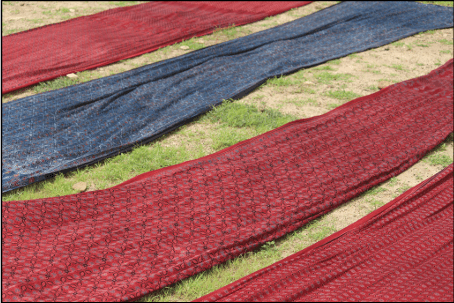
Ajrakh has deep roots in Kutch and is made through a long process of washing, dyeing, printing and resisting. The fabric is prepared first, then wooden blocks are carved and used repeatedly to build the pattern. Natural dyes such as indigo and madder give it those familiar deep blues, reds and blacks. Mud and clay-based resists keep certain parts of the fabric from taking the dye.
What is interesting is how little of the process can actually be rushed. Water, temperature, drying and the dyes all matter. The blocks also have to be placed carefully, again and again, across the fabric.
From a distance, Ajrakh can look quite simple. Up close, there is much more going on. A machine can reproduce the pattern, but the time and handwork behind the original are much harder to reproduce.
Mangalagiri: A Different Kind of Summer Cotton
Mangalagiri cotton is interesting because it doesn't feel like the very light cotton we usually associate with summer. It comes from Mangalagiri in Andhra Pradesh, which has a long tradition of weaving. The fabric is closely woven and has a crispness to it. When you first handle it, there is a little more weight and firmness than you might expect from a summer cotton.
That works particularly well for shirts. The collar and cuffs tend to sit neatly, and the fabric doesn't immediately become limp after wearing it for a few hours. It also has a slightly dry feel when new, which softens with use. The weave itself gives the fabric its character. Even a plain piece can look quite interesting once you see it up close.
It is also a good example of why summer clothing doesn't always have to be extremely thin. A little substance can actually make a shirt more comfortable to wear and easier to live with. It is simply a well-made Indian cotton with a very distinct feel.
From Parampara to the Modern Wardrobe
Indian handloom is often considered to belong to a bygone era, which is actually not true. Across India, there are fabrics whose character cannot be separated from the people and places that make them: a particular way of spinning yarn, a loom used for generations, a pattern remembered by hand, and knowledge passed quietly from one person to the next.
But there is an uncomfortable truth behind Indian handloom. It is hard to speak of preserving a tradition when the person carrying it forward cannot earn a dignified living from it. In many weaving communities, younger people are leaving the loom for steadier work elsewhere. When an artisan leaves, we lose more than a livelihood. We risk losing knowledge that took generations to build.
Parampara begins with understanding these textiles before turning them into clothes. Where does the fibre come from? How is the yarn prepared? What makes the weave distinctive? Who makes it, and what have they learned from those before them? A garment is only the final expression of a much longer story.
Admiration alone cannot keep a tradition alive. Through our Parampara collection, we work with people and organisations connected to the weaving communities we source from, with the aim of supporting fairer wages, access to healthcare and the continued use of traditional looms. We do not want to turn every Indian textile into a marketing story. We want to understand the fabric, respect the hands behind it, and give it a place in the wardrobe of the modern Indian man.